

Why QSR Brands Are Losing Their Audience
And How the Winners Are Pulling Ahead
By McKenzie Telthorst, President
Over the last several years, steady QSR favorites are facing decline.
Drive-thru traffic dropped 11.9%. Burger King’s same-store sales slipped despite launching a $5 value meal ahead of McDonald's. Wendy's is closing 5-6% of its stores due to underperformance.
Meanwhile, Chick-fil-A generates $9.2 million per freestanding location—more than double the QSR average. Chipotle's same-store sales grew 7.4% on top of 2023's 7.9% gain. Raising Cane's posted 17.5% same-store sales growth driven almost entirely by traffic. Even Chili's jumped 14.1% by targeting QSR burger customers directly.
The gap between the brands winning and the brands treading water is widening. And the ones getting squeezed aren't losing because of bad food or high prices. They're losing because they're trying to be everything, which has left them meaning nothing.

The Commitment Problem
Walk into any legacy QSR boardroom and you'll hear variations of the same conversation. Someone wants to chase plant-based. Someone else wants to double down on value. Marketing pushes for premium chicken sandwiches. Franchisees beg for operational simplification. The CFO wants to test third-party delivery.
So the brand tries to do it all. Each decision makes sense in isolation. But nobody's asking what all these additions are doing to the brand itself. You end up with a menu full of featured items fighting for attention, a value proposition that's muddled, a drive-thru that takes eight minutes, and a marketing message that changes every six weeks.
Your customers can't remember what you're supposed to be good at because you haven't committed to being great at anything. The brands pulling ahead picked their lane years ago and stayed in it, even when it would have been easier to chase the trend.
The Simplicity Advantage

The fastest-growing concepts in QSR right now are doing something that feels almost radical: they're subtracting instead of adding.
Raising Cane's sells chicken fingers with a few sides. Dave's Hot Chicken built a billion-dollar brand on spicy chicken tenders and sliders. Cava became the Mediterranean fast-casual leader by perfecting the bowl. No experimentation or sprawl; rather, relentless execution on one thing.
This matters because of how people discover restaurants now. More than 70% of Gen Z find new places to eat on social media. And you know what photographs well? A perfect bowl. A loaded plate of Korean fried chicken. A single, gorgeous burger with personality. Not menu option #47 from a brand trying to please everyone.
The complexity tax is real. Every additional menu item slows down service, increases error rates, complicates training, and dilutes your brand identity. The focused brands can invest in perfecting fewer things, training staff faster, and building a reputation that actually means something.
Value Wars Without Strategy
The great value wars of 2024 are a perfect case study in tactics versus strategy. Every major chain went all-in on bundled value: McDonald's $5 Meal Deal, Burger King's $5 Your Way, Wendy's Biggie Bag, Taco Bell's Cravings Value Menu.
It drove traffic—sort of. Three in five meal deal buyers chose a restaurant specifically because of the offer. But it’s a trap! Value without differentiation is simple discounting. Wendy's customers rated their Biggie Bag as the best value offer in the category. Their traffic still dropped 6.7%.
Why? Because when everyone's offering value, value stops being a reason to choose you. It becomes table stakes. McDonald's succeeded with their McValue platform, not only because of price, but because it was a branded framework that reinforced what McDonald's means. They organized their value strategy around their brand. Most legacy brands kept stuffing more deals into the promotional calendar.
How the Winners Actually Win
The brands pulling ahead share something legacy chains seem to have forgotten: they've committed to a strategy and stuck with it, even when market conditions tempted them to pivot.
Chick-fil-A is consistently the slowest on drive-thru speed metrics. But they decided years ago that hospitality matters more than shaving seconds off the timer. Customers know this. They choose Chick-fil-A specifically for this experience. The wait isn't a bug—it's a feature of the brand promise.
Chipotle isn't winning with value meals or LTO gimmicks. They're winning by owning quality ingredients, customizable bowls, and digital-forward ordering. When customers rank them on perceptual drivers, they lead in 'good amount of food for your money' and 'quality ingredients’, which mirrors a clear strategy they have executed relentlessly over years.
Even Chili's figured this out. They launched a Big Smasher burger positioned to compete with QSR pricing while delivering sit-down quality. They didn't try to be everything. They picked one battle and committed to winning it.
The Retention Math That Matters
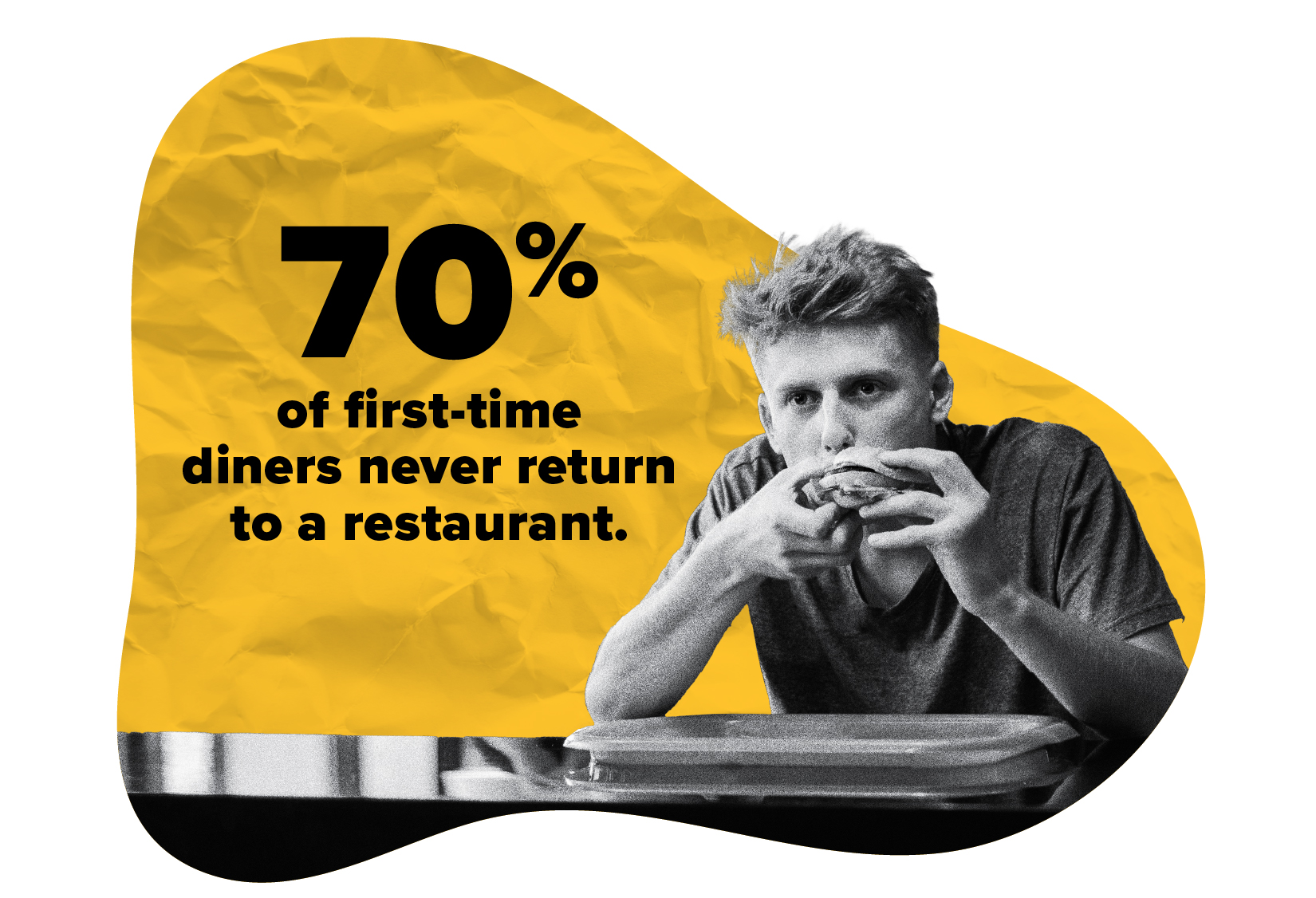
Here's a terrifying stat: 70% of first-time diners never return to a restaurant. Industry-wide, restaurants average about 55% customer retention. Yet 65-80% of sales come from repeat customers.
The math is brutal: acquiring a new customer costs five times more than retaining an existing one, and a 5% increase in retention can boost profits by 25-95%. But you can't retain customers who can't remember why they chose you in the first place.
The brands winning on retention have figured out something simple: people return to places that stand for something specific. Not places with a little of everything. Not places that change their positioning every quarter. Places where you know what you're getting and why you're going there.
What Legacy Brands Need to Do
We’re not saying you have to pivot to some radical new concept. Growth is about putting a stake in the ground and sticking with it long enough for it to matter. And in an industry that moves at the speed of a drive-thru, that takes discipline.
Pick your lane. Are you the value leader? The quality leader? The convenience leader? You can't be all of them. The brands winning right now made this choice and let it guide every other decision.
Simplify your menu ruthlessly. Every item you cut improves speed, reduces complexity, and clarifies your identity. The question isn't 'Do people order this?' It's 'Does this reinforce what we stand for?'
Stop chasing every trend. Not every shift in consumer behavior is relevant to your brand. If it doesn't reinforce your strategy, it's a distraction.
Build your marketing around a promise and repeat it until you're sick of saying it. Your customers are just starting to hear you. The brands with the clearest positioning have been saying the same thing for years.
The Bottom Line
QSR brands are not losing ground because they lack resources or talent. They're struggling because they've forgotten what made them relevant in the first place. They've spent years adding without subtracting, reacting without strategizing, optimizing operations while neglecting brand clarity.
The brands pulling ahead have made different choices. They've committed to being exceptional at one thing rather than acceptable at everything. They've simplified their operations to support their strategy. They've built brands that people choose intentionally, not accidentally.
Your customers aren't leaving because someone else has better food or lower prices. They're leaving because they can't remember what you stand for anymore.
At UPBrand, we help QSR brands cut through the noise and recommit to strategic clarity. If your traffic numbers are telling a story you don't want to hear, let's talk.
Reach out to Betty Mertens at bettym@upbrand.com.