

The Algorithm Is Not Your Friend
by John Moenster, Director of Digital
I want you to think back to the last time you were served up some suggested content that felt a little too on the nose...
Perhaps it was a clip of one of your favorite films or shows you’ve seen a thousand times or perhaps, even more likely, it was a product or brand that someone just happened to be talking about around you not long ago. Or maybe you watched a video about running shoes the other day and now your For You page is chock full of half-marathon and 5K runner content.
Sometimes it’s annoying and inundating, but sometimes you can’t help but get sucked in and then find yourself glued to your device for an extra 20-30 minutes at least. All of this is being driven behind the scenes by an algorithm. And while it may feel like an algorithm is creepy-smart (it is, kind of), I’m here to tell you that it also doesn’t care about you.
The Math Behind the Curtain
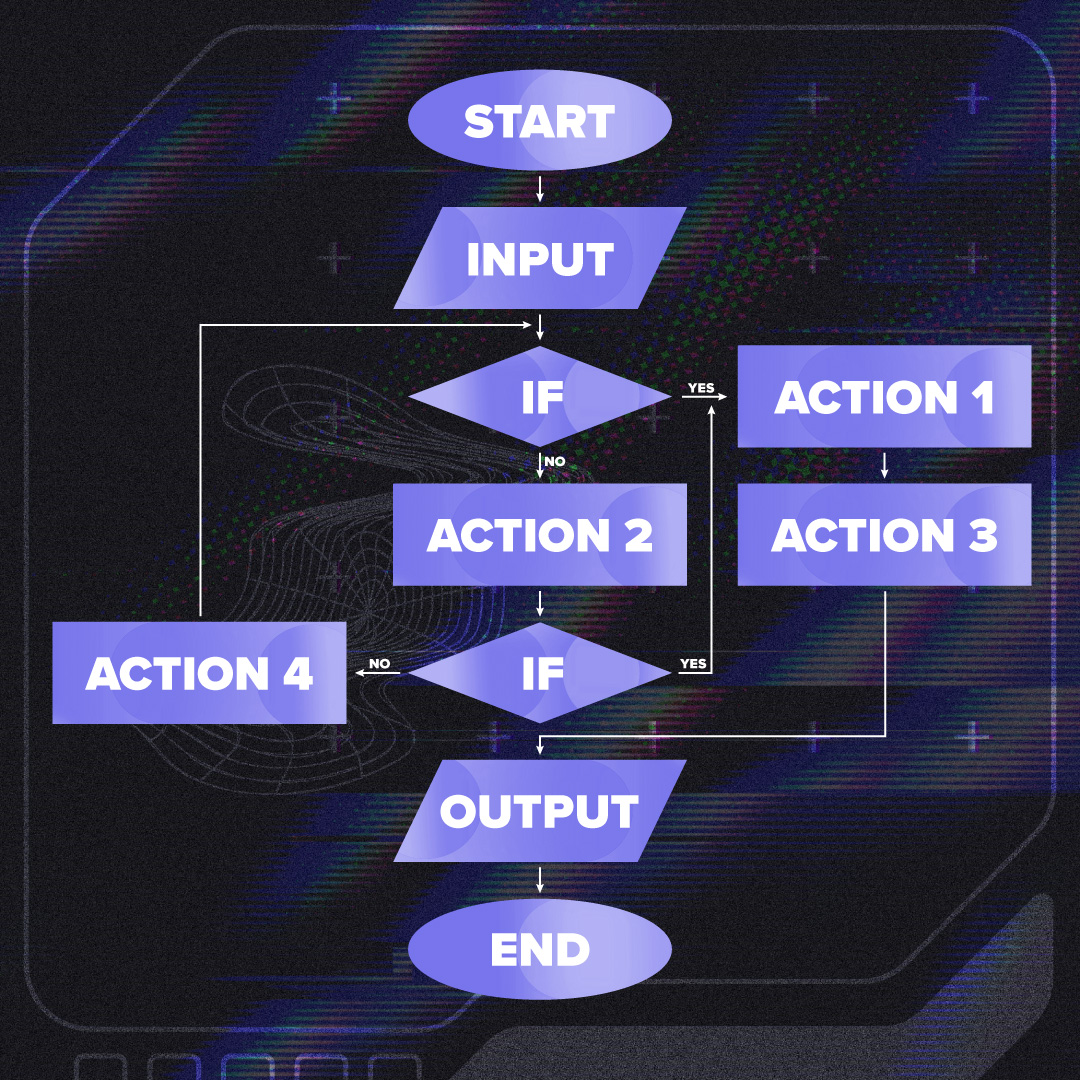
I’m not here to say algorithms are inherently evil, in fact they are pretty boring and tend to follow a basic formula:
Algorithm = sets of rules + data inputs + optimization goals = Output
However, when you break down those components of rules, inputs and goals, the formula quickly becomes quite complex and detailed.
The other thing you need to understand is that in order to optimize, algorithms are constantly testing. They frequently deploy things like multivariate (A/B+) testing and reinforcement loops when serving content to users. This continuous experimentation and ongoing cycles of optimization is not unlike how most brands and marketers today operate in digital channels and spaces. Algorithms prioritize signals and metrics, just like brands do. The difference, however, is what they’ve been instructed to optimize against.
Here’s the Rub
While a marketing campaign typically prioritizes outcomes such as website traffic or pre-defined conversions, platform algorithms tend to focus on optimizing for things like:
- Time Spent (Keeping you on the platform, longer)
- Engagement (Getting you to like, comment, share, subscribe, etc.)
- Ad Revenue (Serving you ads to justify ad spend via impressions and engagements)
Further, they typically are NOT incentivized to prioritize things like:
- Truth
- Well-being
- Nuance and Context
As a result, many systems, platforms and channels we encounter in our everyday lives naturally favor:
- Outrage > Accuracy
- Extremes > Moderation
- Addiction > Satisfaction
Sit back and think about that last part and also your most recent scroll down a feed for a minute. What was it like? There is a reason why people often use the term “doomscrolling” these days.
Hence, why we’re here:
The algorithm is not your friend; it’s your engagement dealer.

Why The Feed Feels So Chaotic
Most people assume their feeds reflect who they are. In reality, they often reflect what they accidentally paused on for three extra seconds last week. An algorithm doesn’t understand you in the way a friend understands you. It simply tracks behavior and builds probabilities. If emotional or provocative content keeps your attention longer, the system learns to serve you more of it.
Over time, that creates a distortion effect. A casual interest in fitness can spiral into extreme wellness content. A few political videos can quickly turn into a highly polarized feed. Not because you consciously asked for it, but because recommendation systems are designed to escalate engagement. Calm and balanced perspectives rarely outperform outrage, certainty, fear, or tribal validation.
That’s part of why the internet and being online can feel so emotionally exhausting. We all live inside personalized media environments optimized for reaction. The algorithm notices what triggers us faster than what informs us, and it often treats stress, anger, and doomscrolling as signs of success because those behaviors keep people engaged.
What makes this especially powerful is that it doesn’t feel manipulative. The feed becomes so tailored to your interests, humor, fears, and worldview that it creates the illusion of control. But recommendation systems aren’t neutral mirrors. They shape behavior while responding to it. Every click, pause, comment, and share trains the next recommendation.
The algorithm is simply doing what it was designed to do: maximize attention with ruthless efficiency. The problem is that attention and well-being are not always the same thing.
Further, there are several other things that happen in the background that can dramatically affect users, for example:
-
- The “Cold Start” Problem: Based on a principle in data science, if a platform knows nothing about a new user (a cold start), it will target them with the most inflammatory, high-engagement content first to see what sticks.
- Dopamine Reward Schedules: A mechanism deployed to keep users glued to the screen that employs the same trick used by gambling machines: variable-ratio reinforcement. If every piece of content is good, users get bored. If every piece of content is bad, users leave. Algorithms mix mediocre content with occasional “jackpots” to keep you scrolling.
- Algorithmic Radicalization / “The Rabbit Hole Effect”: A well-documented phenomenon where algorithms naturally drift toward extremes because moderation doesn't drive engagement. For example, a user looking up vegetarian recipes can be algorithmically guided toward extreme fruitarianism or eating disorder content within a few clicks because the system always pushes for the next level of intensity to maintain attention.
The Algorithm Goes on Trial
Recently, courts have started asking a question that would have sounded ridiculous a decade ago: should major tech companies be responsible not just for hosting content, but for algorithmically pushing it toward people? That’s a shift that matters greatly.
For years, companies like Meta Platforms and Google argued they were neutral platforms. But recent lawsuits and rulings involving youth mental health, addictive design, and algorithmic amplification are beginning to challenge that idea.
There is no question about whether harmful content exists online. What these cases challenged was whether some of the largest platforms knowingly built systems that reward outrage, emotional intensity, and compulsive engagement because those behaviors keep people scrolling longer.
And ironically, there’s a decent chance you barely heard about these recent cases. As the platforms that shape public attention are also the ones under scrutiny. And celebrity drama tends to outperform serious conversations about algorithmic accountability.
Whether every future lawsuit succeeds is almost beside the point. A legal precedent has been set and a cultural shift is happening. For the first time, courts and regulators are beginning to separate “user choice” from systems intentionally designed to influence behavior.
So What Can We Do About It?
The truth is that algorithms aren’t going away. Neither are recommendation systems, personalized feeds, predictive AI models, or increasingly sophisticated tools designed to capture and hold our attention. In fact, they’re only getting better at it over time.
Which means our attention, focus, and critical thinking skills have quickly, quietly become some of our most valuable assets.
What scares me the most isn’t the misinformation or the polarization; it’s apathy. And the collective loss of our habit to stop and ask questions like: Why am I seeing this? What does this make me feel? Who benefits if I keep paying attention?
Further, while we’ve largely been referring to social media here, it also applies to the new wave of AI tools and large language models (LLMs) that have recently flooded the market. These systems are built differently, but many rely on similar feedback loops: personalization, reinforcement, prediction, engagement. They learn from us while simultaneously shaping how we think, work, communicate and even validate ourselves. And look, as a frequent user of AI and LLMs, I share this from experience: some of these tools could stand to settle down a little.
So go ahead and tell Claude to chill out, it doesn’t need to attack the strategic error in your prompt before responding to it; and tell ChatGPT to stop congratulating you every time you bring up a new idea or coherent thought. These kinds of feeding our insecurities and constant feedback loops are not helping advance humanity.
Because the more these systems optimize for engagement, comfort, reassurance, and emotional dependency, it’s more important than ever before for us to maintain a little healthy friction, a little skepticism and some independent thought.
Here are some basic tips to help keep the algorithms at bay:
- Practice Zero Engagement: I’m not saying never engage with your friends and family online, but it helps to minimize your reactions, comments and shares. This is especially true when dealing with suggested and paid content, as minimizing interaction reduces explicit signals. It doesn’t stop the algorithm, as many recommendation systems also rely heavily on implicit signals like “dwell time” or how long you hover over a particular post. Conversely, you can try an occasional burst of engagement and/or follows on social media and watch how your feed changes. This forces a rapid re-weighting of your recommendation profile.
- Share via Screenshots: Share functionality is a crucial component of algorithmic learning on social media and many other online platforms. Sharing is a high-intent engagement that also expands reach, making it far more valuable than a quick reaction as you scroll. Screenshotting something and sending the image directly will not trigger this loop. However, this method also isn’t perfect. While you bypass the share metric, many apps detect screenshots locally and log the behavior to track your high interest. It’s also worth taking the time to look up which apps have access to your entire camera roll.
- Clear Your Cache and History Regularly: The metadata your device accumulates while browsing online can sometimes be referenced or scanned by an algorithm, enabling it to learn about you even if you’re not voluntarily providing the information. Clearing this data or setting a shorter data retention period in your settings will make it less clear where you’ve been and what you’ve been browsing online. Keep in mind that clearing your local cache only removes temporary files, cookies, and images to free up space. It won't delete data that tech companies have already harvested and stored on their cloud servers. To truly mask what you've been browsing, log into your account settings (like Google My Activity or Meta Privacy Center) and pause or delete their Web & App Activity or Search History at the server level.
- Look for Learning or Study Modes in AI Tools: These settings fundamentally shift LLM outputs from instant answer machines to active tutors. They are quite recent, introduced in mid-to-late 2025, but are quickly becoming popular in academia as they leverage Socratic questioning to guide users through concepts step-by-step.
The algorithm may not be your friend, but it is paying very close attention to what you reward.