

The Brand Launchpad: What 90 Days of Clarity Looks Like
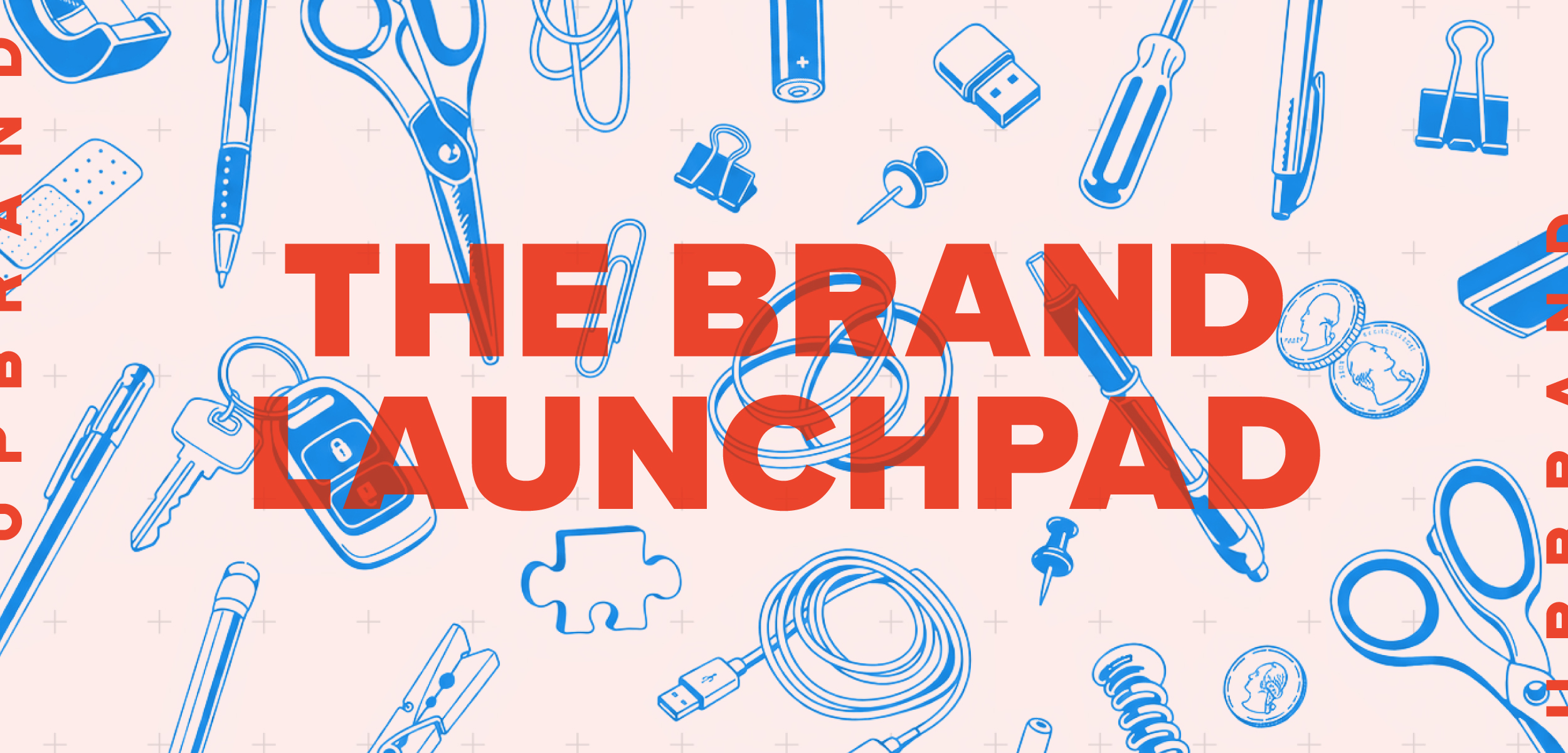
Open your kitchen junk drawer right now. Go ahead, I'll wait.
You've got rubber bands nested inside other rubber bands, a tangled mess of charging cables (including one for that iPad you were gifted in 2009), expired coupons, batteries you're pretty sure are dead but haven't tested, and a collection of keys that unlock doors you no longer own.
Every time you need a tiny screwdriver, it's an archeological dig. When someone needs a pen, you grab five before finding one that works. Your drawer has accumulated years of stuff that's easier to ignore than address.
Your brand is that drawer.
This happens to every growing company. You start with a clear purpose, a tight message, a focused audience. Then you land a client who's adjacent to your target. Then another. Someone writes a blog post that performs well, so you chase that topic for six months. Your sales team closes deals by promising things that stretch your positioning. A trade publication uses language you'd never use yourself, but now that's how people introduce you at conferences.
Pretty soon, it’s a mess. You know there's real, meaningful, defensible value in there—but finding it requires digging past all the accumulated stuff that used to serve a purpose but doesn't anymore.
Someone Else Is Building Your Brand
While you've been busy running the business, your brand has been having conversations without you. Your customers are telling each other what you stand for. Your competitors are defining you by what they claim you're missing. A LinkedIn influencer mentioned you in a post, and now 3,000 people think you do something you definitely don't do.
Marketing stopped being a one-way broadcast sometime around 2010. These days, your brand is more like a Wikipedia page than a billboard—it's being edited in real time by everyone who interacts with it. When you don't organize the drawer yourself, someone else does it for you. And they'll put the batteries where the rubber bands should go, because they don't know how you actually use this stuff.
The Magic Moment

When you finally pull everything out and start taking inventory, you realize three things pretty quickly:
First, you've been hanging on to stuff you don't need. the instruction manual for the blender you replaced. The spare key to your college apartment. You don't need permission to throw them away. You just need to see them all at once to realize they've been taking up space for no reason.
Second, the things you actually use every day have been buried under the things you use once a year. The stamps are at the bottom. The tape is somewhere in the back. The screwdriver you use every week is magnetically attached to the Christmas light tester you won't need until December.
Third, once you see what you actually have, organizing it becomes obvious. You just need a few drawer organizers and the discipline to put things back where they belong.
The Brand Launchpad works the same way. We look at everything objectively, keep what matters, and build a system that keeps it organized going forward.
The Three Stages of the Brand Launchpad

Reflect: Empty the Drawer
We start by pulling everything out and spreading it across the counter. No judgment. What do you actually have? What are people saying about you? What does your team think you stand for vs. what your customers think you stand for? We facilitate conversations with your leadership team, front-line employees, and sometimes your customers. We audit your existing materials and map the gaps between what you're trying to say and what people are actually hearing.
Most companies skip this step. They jump straight to fixing the messaging without understanding what broke in the first place. It's like hitting The Container Store before you've thrown out the dead batteries. You're just organizing clutter.
Reveal: Decide What Stays
Once everything's in full view, we decide what to keep based on utility rather than sentimentality. What are you actually using? What serves the brand you're trying to build, and what's just taking up space? This is where we build your brand platform—the foundation that holds everything else up. We define who you're really talking to, what they actually care about, how you show up differently than everyone else in your category.
There are two sides to this exercise. One side, built from your purpose, vision, mission and values, guides your business decisions. The other side, built from your promise, attributes, tagline and voice, defines what you say and how you say it. The process is based on established principles of consumer psychology, so both sides connect to each other and your audiences on a deep, emotional level.
Reframe: Put The Right Things Back (Better)
Now we translate the platform into language you can actually use. Your message matrix tells you what to say to different audiences in different situations. Think of this as the drawer organizer itself—flexible enough to adapt, but structured enough that everything has a home.
You'll also get customized examples of the framework in action: your elevator pitch, your homepage copy, internal language that explains to your sales team why we're saying no to certain opportunities, onboarding documents that help new hires understand how to talk about the brand. We curate the list with you to ensure you have the tools to hit the ground running.
We finish with a strategic rollout plan—how to introduce this internally before you take it external, how to train your team to use it, how to make the new organization stick.
By the end, you're not holding a beautiful deck that lives on a shelf. You're holding a toolkit that works on a Tuesday morning when someone asks you to make a decision.
Why 90 Days?
That's how long it takes to properly recalibrate. If you do it in a weekend, you're speed-sorting and keeping things you shouldn't. If you stretch it out over six months, you're overthinking it, and the drawer fills up again while you're still deciding what to throw away.
Ninety days is the sweet spot. Long enough to do the real work—the challenging conversations about what you're not anymore, the strategic decisions about where to focus, the alignment that can't be rushed. But short enough that you can't hide from the tough decisions.
This Is Normal (And We're Good at It)

If your brand feels like a junk drawer right now, you're not alone. Every company that gets past the startup phase ends up here. The scrappy positioning that worked when you had twelve employees stops working when you have eighty. The message that resonated with your first market starts feeling fuzzy when you expand into adjacent ones.
The brands that look effortlessly clear and focused are simply committed. They've done the work of deciding what stays and what goes. They've built the systems to keep things in their place.
We've helped dozens of brands through this process. Legacy companies trying to stay relevant. Fast-growing startups trying to professionalize. Family businesses transitioning to new leadership. PE-backed companies trying to scale without losing what made them special. The specifics are always different, but the underlying dynamic is always the same: too much accumulated stuff, not enough intentional structure.
As one client put it:[UPBrand’s] processes for understanding what your company is all about, why it exists, and to find your voice and story from that, has clearly been refined over years of experience.
A decision-making framework that tells you what to say yes to and what to walk away from. Alignment across your leadership team—the kind where your CFO and your CMO are finally speaking the same language. Clarity about who you're actually serving and what you're actually promising them.
You also get the confidence that comes from knowing where everything lives. When someone asks you to explain what you do, you don't have to dig through five years of positioning pivots to find the answer. When you're deciding whether to launch a new product line, you have a framework to test it against–putting your brand strategy firmly back in your grasp.
The real gift: no more second-guessing. You stop wondering if you're on brand. You can feel it. And when something doesn't fit, you notice immediately, because everything else has a place.
Who This Works For
The Launchpad works best for companies at an inflection point: your customers are aging out, you're expanding into new markets, your founder stepped back, or you're facing new competitive pressure. It works for leadership teams that are tired of talking past each other and brands that have been fine for too long.
If you just need a logo refresh or a reskinned website, this is probably overkill (and we’ll figure that out early in the process). But if you're looking for the kind of clarity that changes how you make decisions (not just how you describe those decisions), we should talk.
Ready to clean out the drawer?
The Brand Launchpad is a 90-day engagement starting at $40,000. If you're ready to move from scattered to focused, let's talk. Reach out to Betty Mertens at bettym@upbrand.com.