
Curiosity as a Strategic Advantage

I’ve recently become fascinated by how the brain builds mental maps to help us navigate the world.
If your brain tried to process all the sensory information coming in at once, you would be completely overwhelmed, so it takes shortcuts. It uses information from your past experiences to help you understand and predict the future.
Without a map, every commute would feel like your first day behind the wheel. So while we can be grateful for the efficiency our brains are creating, it comes at a cost.
As psychologist and neuroscientist Norman Farb explained in a recent episode of Hidden Brain (opens in a new window), “our habits are not just habits of behavior, they’re also habits of perception.” We learn where to look, what to ignore, which possibilities seem realistic and which questions are no longer worth asking.
Classic research on inattentional blindness (opens in a new window) makes this painfully clear. When study participants were asked to count basketball passes in a video, many failed to notice a person in a gorilla suit walking through the scene. Their attention was doing exactly what they had asked it to do. It didn’t even see the information they weren’t looking for.
Focus helps us see, but it also determines what we miss.
Stress Makes the Map Feel Even More Convincing

Now add a high-stakes marketing challenge.
Sales are slowing. A competitor is gaining ground. Customer behavior is changing. Leadership wants answers before the next board meeting, which is always a relaxing environment where everyone feels free to explore half-formed ideas.
Under pressure, we tend to reach for what we already know.
Farb describes this as repeatedly opening the same toolbox, even when the tools inside may have helped create the problem. When stress rises, our established mental models can become dominant while we become less open to information that would force those models to change.
The neuroscience is not quite as tidy as saying one brain network switches on while another switches off. Broader research (opens in a new window) supports the idea that stress can disrupt executive functions such as working memory and cognitive flexibility, making it harder to adapt when circumstances change.
This is one reason a problem can feel so overwhelming from the inside.
Beyond processing the challenge itself, you’re processing its history, internal politics, past attempts, budget constraints and everything people have already decided is “just how this industry works.”
New information gets pulled into an old story.
Familiar Answers Can Block Better Ones
Psychologists call one version of this the Einstellung effect (opens in a new window) (say that five times fast). It occurs when a familiar solution comes to mind and prevents someone from discovering a better approach, even when that better approach is available. Research has found that people can keep directing their attention toward the familiar solution while barely considering alternatives.
This happens in marketing constantly.
We need awareness, so we need a campaign.
We need younger customers, so we need TikTok.
The campaign underperformed, so we need more impressions.
The brand feels dated, so we need a new logo.
These answers may be right. But are we arriving at them before the questions have been fully explored?
Curiosity Is a Strategic Discipline
Curiosity is often treated like a pleasant personality trait. Something that makes a person enjoyable at dinner parties or unusually committed to documentaries about shipwrecks.
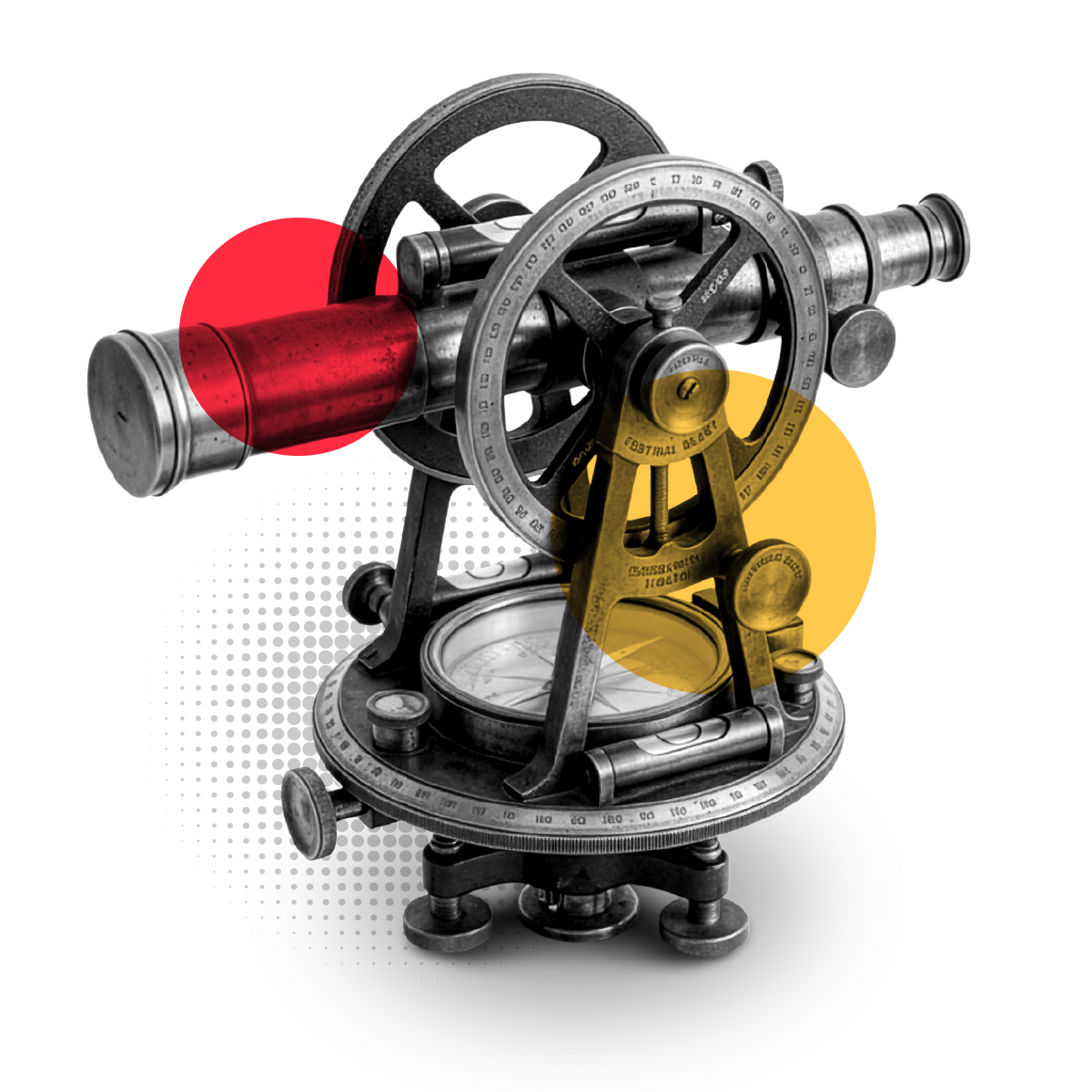
Strategic curiosity is different. It is the deliberate practice of making your current map vulnerable to new information.
That means asking:
- What are we assuming is still true?
- What has changed while we were busy executing?
- What information would cause us to change our minds?
- What might a new customer notice that we no longer see?
Curiosity has measurable effects on learning. In one fMRI study (opens in a new window), brain scans showed that when we’re curious, the parts of our brain responsible for motivation and reward become more active and work more closely with the systems that help us form memories. Participants remembered not only the information they were curious about, but also unrelated information presented while they were in those curious states.
Curiosity prepares the brain to receive information instead of merely sorting it into an existing opinion.
Farb describes this as becoming “willing to be surprised.” Not abandoning expertise or pretending every idea is equally brilliant. Just remaining open to the possibility that the solution may not look the way you expected.
Why Outside Perspective Helps
This is where the outside perspective can be a total game-changer. What makes it so valuable is that an outside partner hasn’t rehearsed your assumptions.
They can hear five leaders describe the brand in five different ways and recognize the misalignment everyone else has learned to work around. They can ask why a customer should care without accepting an answer built entirely from features and internal language. They can notice that the team is trying to fix a positioning problem with a media plan.
Research on psychological distancing (opens in a new window) offers a related insight. Looking at a difficult situation from a slightly removed perspective has been associated with less emotional reactivity, greater problem-solving behavior and wiser reasoning.
An outside perspective isn’t perfectly objective. No perspective is, but distance can loosen the grip of the existing story.
Sometimes a strategic partner’s most useful contribution is a question that makes the old answer feel less inevitable.
Before You Add Another Tactic, Check the Map
When a marketing challenge feels overwhelming, the instinct is usually to do something.
Action feels good. It restores a sense of control, but before asking, “What should we do next?” it may be worth asking some questions about the mental map you are using:
- When was it created?
- What assumptions are built into it?
- What signals are we filtering out?
- And who could help us see the terrain without carrying all the history that makes it hard to see clearly?
Fresh perspective can come from anywhere. It could be someone on a different team, a customer who hasn’t learned your language yet, or an outside partner who isn’t carrying all the history behind the problem.
Inviting someone else into the conversation introduces another map, and that may be enough to help you see something you’ve been driving past for years.
And occasionally, the map itself is the problem.
If you suspect your team may be following a marketing playbook that made perfect sense five years ago but deserves a few more questions today, we made something for you.
Download our guide to Burning Your Marketing Playbook for a practical way to challenge the assumptions, habits and “this is how we’ve always done it” thinking that can quietly shape your strategy.

Curiosity might mean being willing to burn the old map.
And if you’d like a copilot along for the ride, just give us a call. We’re pretty good with strategy. We’ve also been known to bring snacks.
Sources
Farb, N., & Segal, Z. V. (2024). Better in Every Sense: How the New Science of Sensation Can Help You Reclaim Your Life. Little, Brown Spark.
Farb, N. (2026, July 15). Interview in Hidden Brain: “Changing Our Mental Maps.” Hidden Brain Media. The current page notes that this is a rebroadcast of an earlier episode.
Simons, D. J., & Chabris, C. F. (1999). “Gorillas in Our Midst: Sustained Inattentional Blindness for Dynamic Events.” Perception, 28(9), 1059–1074. DOI: 10.1068/p281059.
Bilalić, M., McLeod, P., & Gobet, F. (2008). “Why Good Thoughts Block Better Ones: The Mechanism of the Pernicious Einstellung (Set) Effect.” Cognition, 108(3), 652–661. DOI: 10.1016/j.cognition.2008.05.005.
Gruber, M. J., Gelman, B. D., & Ranganath, C. (2014). “States of Curiosity Modulate Hippocampus-Dependent Learning via the Dopaminergic Circuit.” Neuron, 84(2), 486–496. DOI: 10.1016/j.neuron.2014.08.060.
Ayduk, Ö., & Kross, E. (2010), plus Kross, E., & Grossmann, I. (2012), for the psychological-distancing passage.